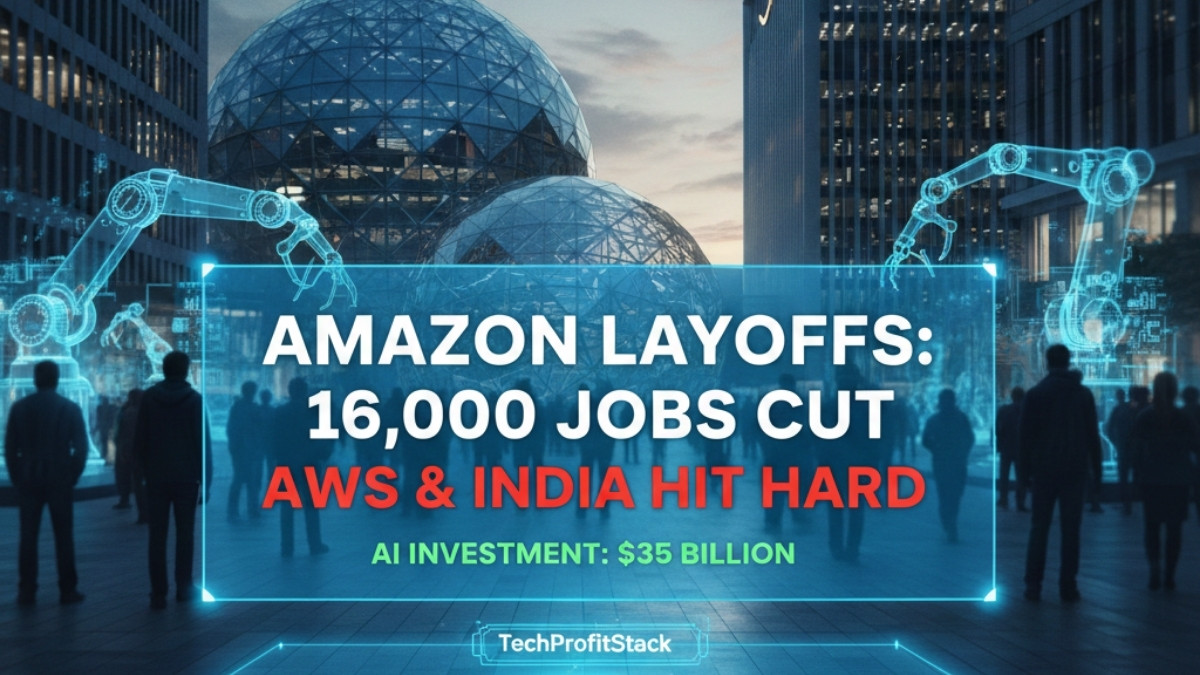
It’s a Tuesday morning that many in the tech world have been dreading. As the sun rises over corporate hubs from Seattle to Bengaluru, thousands of Amazon employees are refreshing their inboxes, waiting for a notification that has become a symbol of the “new lean” era of Big Tech.
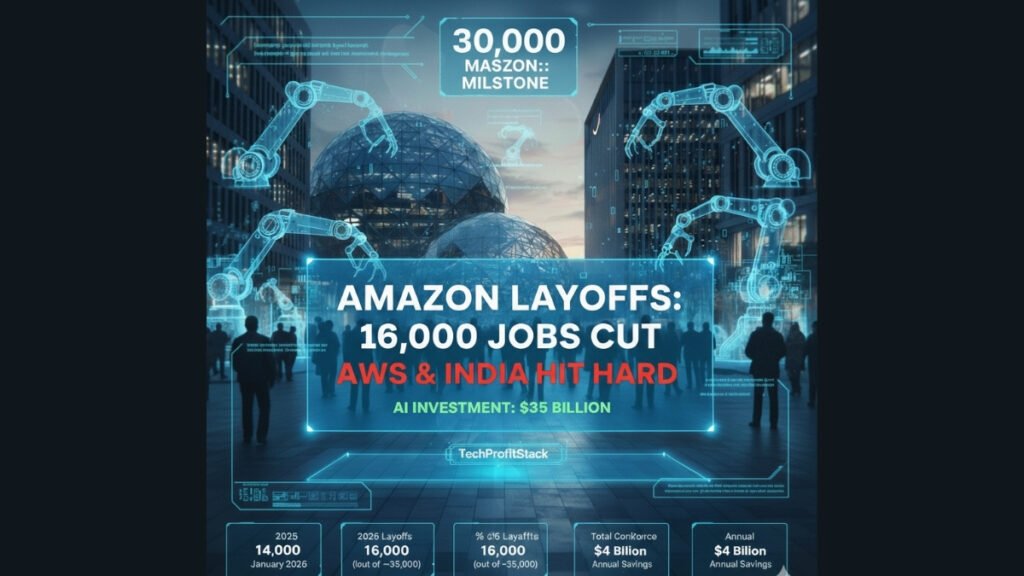
Today marks the start of Phase 2 of Amazon’s massive restructuring—a move that will see roughly 16,000 more corporate roles eliminated globally. When combined with the 14,000 cuts from October 2025, the total bloodbath reaches a staggering 30,000 employees.
The “Bureaucracy Tax” vs. The AI War Chest
While a job loss is always personal, Amazon’s leadership, led by CEO Andy Jassy, is framing this as a necessary cultural reset. He’s called out the “bureaucracy tax”—the layers of middle management that slow down a company meant to operate like a startup.
But for those of us watching the balance sheets , the real story is in the pivot. Amazon isn’t just “saving money”; it’s reallocating it. We are witnessing a historic shift where human payroll is being traded for a $35 billion AI infrastructure.
Key Impact Zones Today:
- AWS (Cloud): Trimming roles as automated coding and AI agents take over legacy maintenance.
- Prime Video: Streamlining production and content management teams.
- PXT (HR): High automation in recruitment and employee management has made large portions of this team “redundant.”
- In fact, as news of the restructuring hit the wires today, AMZN shares climbed over 1.4%, hitting the $241 mark—a clear sign that the street values efficiency over headcount.
The 30,000 Milestone: A New Era of “Lean” Amazon
With today’s news, the math for Amazon employees has become sobering. By combining the 14,000 cuts from late 2025 with today’s 16,000 role eliminations, Amazon is effectively removing 10% of its global corporate workforce (roughly 350,000 office-based staff). While Amazon’s total global headcount is massive at 1.5 million, the target here is clear: the white-collar middle management that grew during the pandemic hiring surge.
I believe this move is a high-stakes gamble. On one hand, CEO Andy Jassy is right—”managerial bloat” kills innovation. By flattening the organization, decisions can be made in hours, not weeks. However, the human cost is real. Thousands of high-performing engineers and managers who built this success are being shown the door. Amazon is offering 90 days of pay and career transition support, but is a “limited health plan” enough for people who gave years to the company? In my view, the company owes these architects of their success a more secure landing.
Why Investors are Staying “Bullish”

Despite the sadness for departing staff, the stock market is reacting with cold logic. Analysts at firms like Morgan Stanley see this as a strategic masterstroke for three reasons:
The AI Pivot: Amazon is redirecting billions in salary savings into custom AI silicon and cloud infrastructure.
Profit Margins: Trimming 30,000 high-salary roles could save the company upwards of $4 billion annually.
Long-Term Efficiency: A leaner Amazon is a more profitable Amazon. For long-term investors, the stock remains a “Strong Buy” because the company is choosing future technology over past structures.
Conclusion
While the human cost of these layoffs is deeply saddening, especially for the thousands who built Amazon’s success, the cold logic of Wall Street remains bullish. By shedding 10% of its corporate layers to fund a $35 billion AI and Cloud future, Amazon is signaling that it prioritizes long-term survival over short-term sentiment. The stock may feel the weight of this transition today, but for those playing the long game, a leaner, AI-driven Amazon appears stronger than ever.
What do you think? Is this shift toward “Agentic AI” worth the loss of 30,000 human roles, or is Big Tech losing its soul in the pursuit of efficiency? Share your thoughts in the comments below!