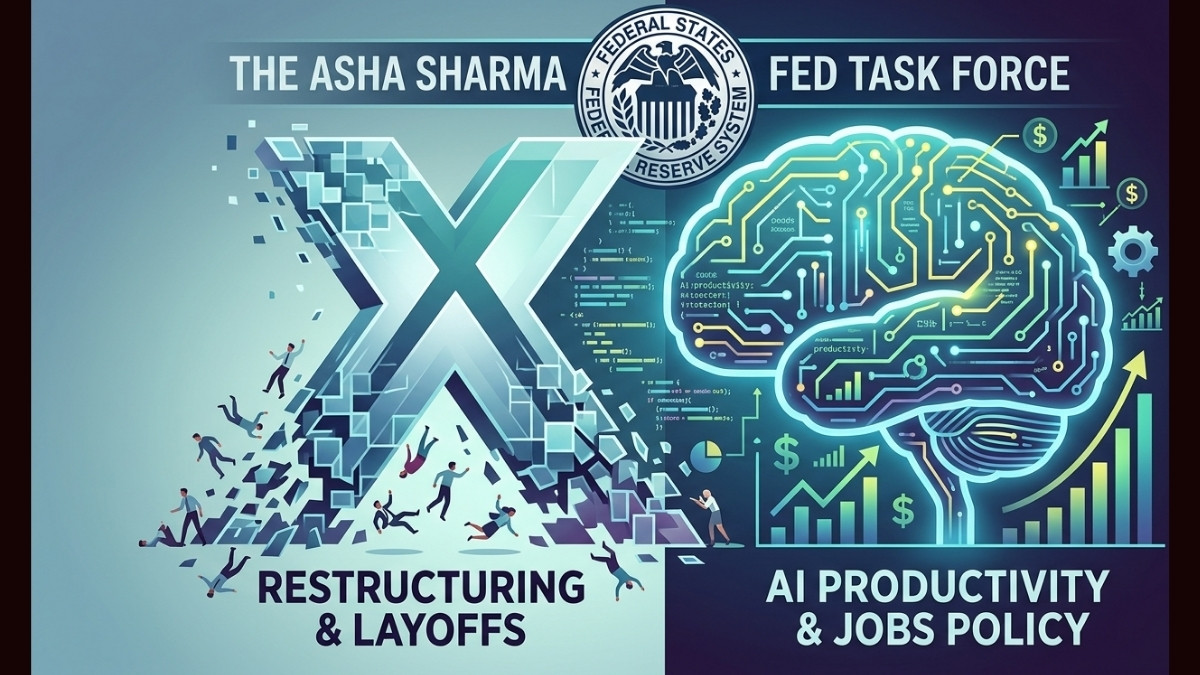
The United States Federal Reserve has announced a structural overhaul of how it monitors the economy, establishing five external panels to modernize monetary policy judgments. Among these new groups, the creation of the Asha Sharma Fed task force—officially named the Productivity and Jobs task force—has drawn significant attention from both the technology sector and economic analysts.
The focus on the Asha Sharma Fed task force stems primarily from the striking timeline surrounding the announcement. The appointment by Federal Reserve Chairman Kevin Warsh occurred just days after Sharma initiated the largest operational down-sizing in the history of Microsoft’s gaming division.
Key Takeaways: The Core Facts
- The Appointment: Xbox CEO Asha Sharma will co-lead a Federal Reserve panel evaluating how artificial intelligence alters corporate productivity and the American labor market.
- The Restructuring: The appointment follows an internal directive at Xbox to eliminate approximately 3,200 roles through the end of the 2027 fiscal year.
- The Task Force Objective: The panel is designed to provide the central bank with real-time operational metrics regarding how automation replaces or shifts human employment, directly influencing future interest rate decisions.
The Operational Reality Behind the Xbox Restructure
To understand the context behind the Asha Sharma Fed task force, it is necessary to examine the current economic pressures facing major technology platforms. As reported by The Times of India, Sharma issued a detailed internal memo to staff explaining that the company was operating at profit margins three to ten times lower than its industry competitors.
The operational scale of the reduction involves 1,600 immediate role eliminations, alongside the divestment of multiple prominent independent game development studios. In her communication, Sharma outlined the harsh financial metrics driving the decision, noting that in a typical year, the division had been losing 64 cents for every dollar invested in specific studio ecosystems. The core objective of the corporate reset is to streamline management from fourteen layers down to a maximum of five, cutting vendor spending by 50% to return the division to growth.
Why the Federal Reserve Tapped Asha Sharma
While the timing of the corporate layoffs has raised questions among industry observers, the Federal Reserve’s rationale for forming the Asha Sharma Fed task force relies strictly on her specialized operational history. The central bank requires advisors who possess direct experience deploying enterprise-level automation rather than relying solely on traditional macroeconomic models.
| Metric | Profile and Panel Architecture |
| Enterprise AI Background | Prior to her role at Xbox, Sharma served as the President of Microsoft’s CoreAI product organization, managing large-scale machine learning integrations. |
| Scale Operations | Her background includes scaling global consumer platforms, previously serving as Chief Operating Officer at Instacart and VP of Product at Meta. |
| Task Force Composition | Sharma co-leads the panel alongside Silicon Valley venture capitalist Marc Andreessen and Stanford University growth economist Charles I. Jones. |
This unique mixture of venture capital insight, academic theory, and corporate execution gives the panel an unvarnished look at how modern companies utilize technology to alter their workforce requirements.
The Macroeconomic Implications for the US Labor Market
The broader purpose of the Asha Sharma Fed task force highlights a growing concern within central banking circles: the speed of generative technology adoption. Traditional economic indicators often lag behind real-time corporate shifts. Federal Reserve officials have previously cautioned that artificial intelligence presents a distinct risk of structural “job displacement” occurring well ahead of new “job creation”.
If enterprise automation rapidly increases output per worker while reducing overall headcounts, it alters the nation’s baseline productivity assumptions. Because the Federal Reserve relies on these exact assumptions to determine whether the economy is overheating, the findings generated by the Asha Sharma Fed task force will serve as a foundational element in shaping long-term monetary policy, inflation forecasts, and interest rate adjustments.
For tech professionals and market participants alike, this appointment serves as a clear indication that corporate automated efficiency is no longer just a boardroom strategy—it is now actively driving federal economic policy.