Key Takeaways (At a Glance)
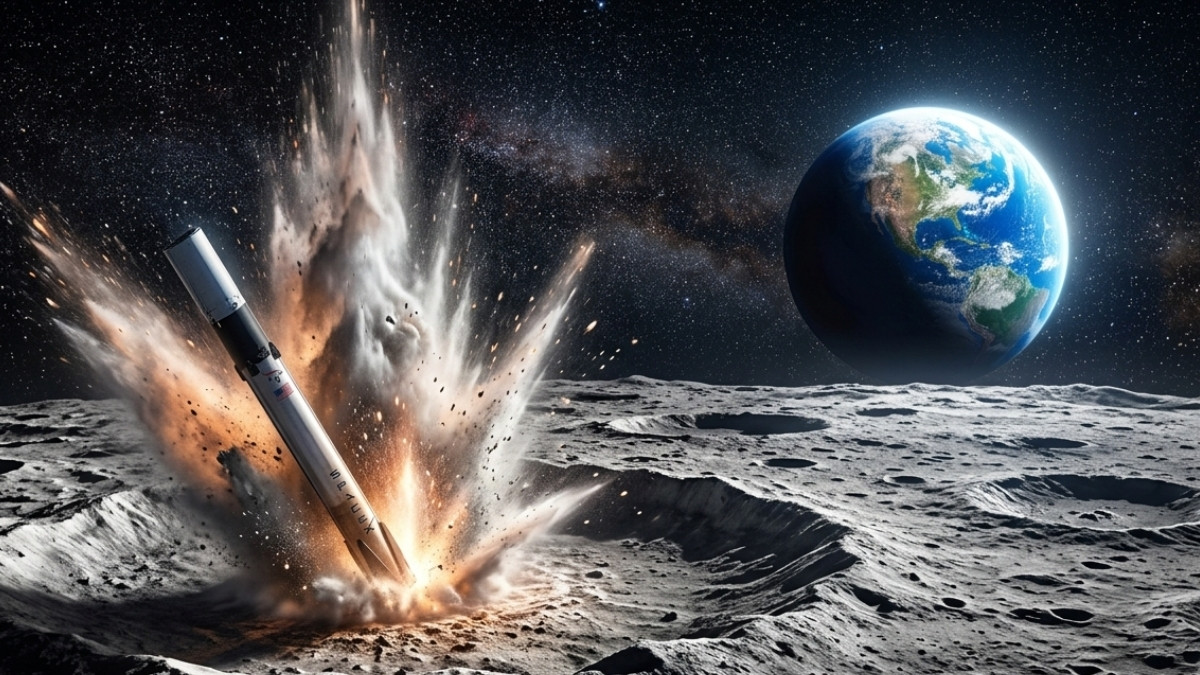
- The Incident: A 4-tonne spent Falcon 9 upper stage from a 2025 mission crashed into the Moon near Einstein Crater at roughly 5,400 mph (8,700 km/h).
- The Cause: Unintentional trajectory shifts caused by 18 months of solar activity, gravity, and radiation pressure.
- The Opportunity: Scientists are treating the 60-foot crater as a rare “controlled” test for lunar geology, while market analysts see a growing trillion-dollar market for space debris tracking and orbital cleanup.
- Investor Takeaway: Commercial space regulation and orbital maintenance companies are becoming high-priority growth sectors.
When news broke this week about the latest SpaceX rocket moon crash, my phone blew up with messages from fellow tech enthusiasts and investors asking the exact same question: “Is space becoming too crowded, and what does this mean for commercial spaceflight stocks?”
As someone who closely tracks the intersection of emerging technology, market trends, and online profitability, I wanted to step back from the clickbait headlines and give you a grounded, expert look at what actually happened—and why this event matters for the future of the commercial space economy.
What Actually Caused the SpaceX Rocket Moon Crash?
Let’s clear up the biggest misconception right away: this was not a navigation error or a failed landing attempt.
In January 2025, a SpaceX Falcon 9 rocket launched carrying two commercial lunar landers (Firefly Aerospace’s Blue Ghost and ispace’s Hakuto-R). The mission itself was a total success. However, after deploying its payload, the rocket’s upper stage was left in a high Earth-Moon orbit.
Unlike launches closer to home where rocket stages burn up in Earth’s atmosphere, deep-space missions leave spent hardware drifting. Over 18 months, three invisible forces went to work:
- Earth and lunar gravitational pulls
- Solar radiation pressure
- Dynamic space weather
Eventually, these tiny orbital tweaks pushed the school-bus-sized object onto a collision course with the Moon’s northern hemisphere. Moving at 5,400 mph (8,700 km/h), the 4-tonne hardware struck the lunar surface near Einstein Crater, unleashing kinetic energy equivalent to roughly 3 tons of TNT and carving out a fresh 60-foot crater.
Why Scientists Are Excited About a Rocket Collision
While a SpaceX rocket moon crash sounds like a cosmic accident, planetary scientists are treating it like an absolute goldmine.
Natural meteoroid impacts happen constantly, but scientists rarely know the exact speed, mass, density, and entry angle of the impactor beforehand. With this SpaceX upper stage, researchers at NASA, the European Southern Observatory (ESO), and South Korean space agencies had precise orbital data prior to collision.
When ground-based telescopes in Chile captured the spectral lines from the resulting dust plume, they identified sodium gas from the churned-up lunar regolith and trace lithium from the rocket itself. NASA’s Lunar Reconnaissance Orbiter (LRO) is now imaging the crash site. These images will give engineers vital data on how surface shocks spread—information critical for designing safe habitats for future Artemis astronauts.
The Commercial Angle: Why Investors Should Pay Attention
If you follow market trends like I do, you know that every major technological disruption creates new market sectors. The SpaceX rocket moon crash highlights a major bottleneck in private space expansion: orbital traffic management and space debris mitigation.
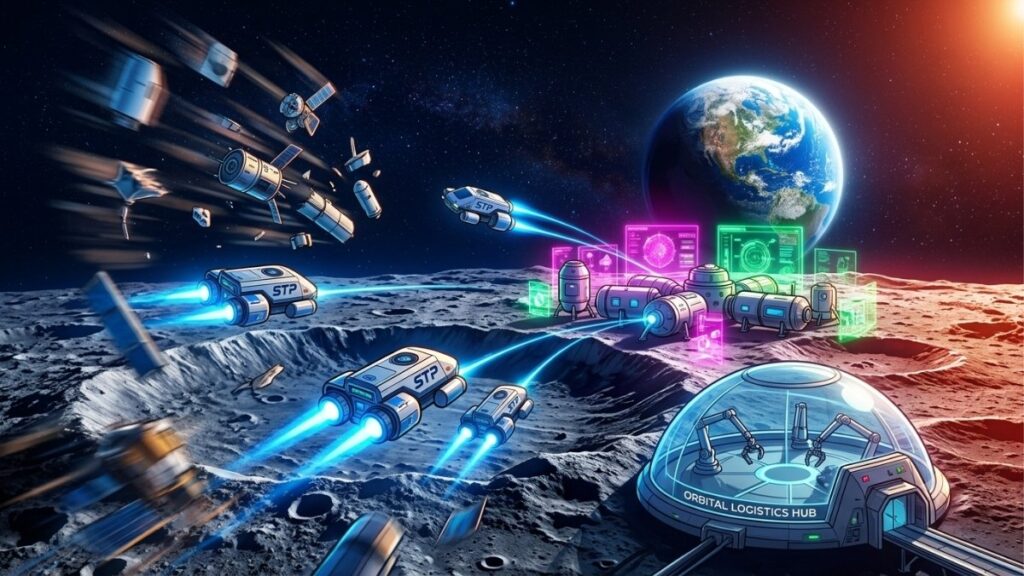
Here are three industry trends triggered by this event:
1. Growing Pressure for Space Debris Regulation
The Moon currently has over 3,000 human-made objects scattered across or near its surface, totaling around 190 tonnes. As private launches double year-over-year, regulatory bodies like the FCC and international space agencies will soon require commercial operators to incorporate active de-orbiting hardware or end-of-life disposal protocols.
2. The Rise of “Orbital Logistics” Startups
When leftover rocket parts drift uncontrollably, they present long-term hazards. Companies working on autonomous space tugs, orbital fuel depots, and debris-removal technology are positioning themselves to capture massive defense and commercial contracts over the next decade.
3. SpaceX’s Dominance Remains Unshaken
Despite the dramatic headlines, industry veterans know that disposing of upper stages via lunar impact is standard and safe practice when Earth re-entry isn’t feasible. SpaceX’s launch cadence and cost efficiency remain light-years ahead of the competition, making short-term media noise a non-issue for their long-term valuation.
My Final Thoughts
Every time a major trend breaks, the internet panics first and analyzes second. The recent SpaceX rocket moon crash isn’t a disaster—it’s a sign of how fast the commercial space sector is growing.
As we transition into an era where lunar missions are routine rather than rare, the companies that solve space sustainability will be the ones creating true long-term value.
💬 Let’s Discuss
What do you think about private companies leaving spent hardware in space? Should governments enforce stricter cleanup policies on commercial launches? Drop a comment below and join the discussion!